Nail length is not a style question first. It is an ergonomics question. The right length is the longest one you can type with, work in, play in, and forget about for two to three weeks, and that answer differs sharply between a desk job, a hospital shift, and a violin practice schedule. Photos online are taken on hands that mostly hold coffee cups for a living. At Villaggio Nails & Spa in Cornelius, the length conversation goes better as a comparison than as a consultation, so here is the table first and the reasoning after it.
Lengths below are described by how much free edge extends past the fingertip, since salon labels like short and medium vary. Your natural nail bed length matters too: a long nail bed makes a modest extension look dramatic, and a short bed makes the same extension look subtle.
| Length | Typing and screens | Hands-on work | Instruments and sport | Adjustment and upkeep |
|---|---|---|---|---|
| Natural, no free edge | No change at all | Suits health care, food service, and childcare rules | Required for most string and piano playing | None; fills feel like ordinary manicures |
| Short, about 1–2 mm past fingertip | Minor retraining, pads instead of tips | Works for most jobs with gloves | Fine for many wind instruments and gym use | About a week to feel normal |
| Medium, about 3–4 mm past fingertip | Noticeable at keyboards; error rate rises at first | Catches on tasks; breaks more under leverage | Difficult for strings; risky for ball sports | Full adjustment week; strict fill schedule |
| Long, 5 mm or more past fingertip | Typing with tips or knuckles; slow at first | Impractical for manual and care work | Generally incompatible | Ongoing adjustment; highest break and lift risk |
The adjustment week is real
Whichever step up you take, budget about a week of clumsiness. Contact lenses, credit cards in tight wallet slots, buttons, zippers, car seat buckles, picking up a phone flat on a table: each one is a small task your hands have automated at your old length, and each one needs relearning. Most people adapt within days for short lengths and within the week for medium. What does not adapt is physics. A longer nail is a longer lever, so the same knock delivers more force to the bond and to your natural nail. Breaks on longer sets happen lower and hurt more. That is not a skill issue you can practice away.
A useful test in the chair is the fingertip test. Press your fingertip against a flat surface. If the nail edge meets the surface before the pad of your finger does, everyday pressure will land on the nail first, all day. For most working hands, you want the pad to win that test or at least tie it.
Jobs that decide for you
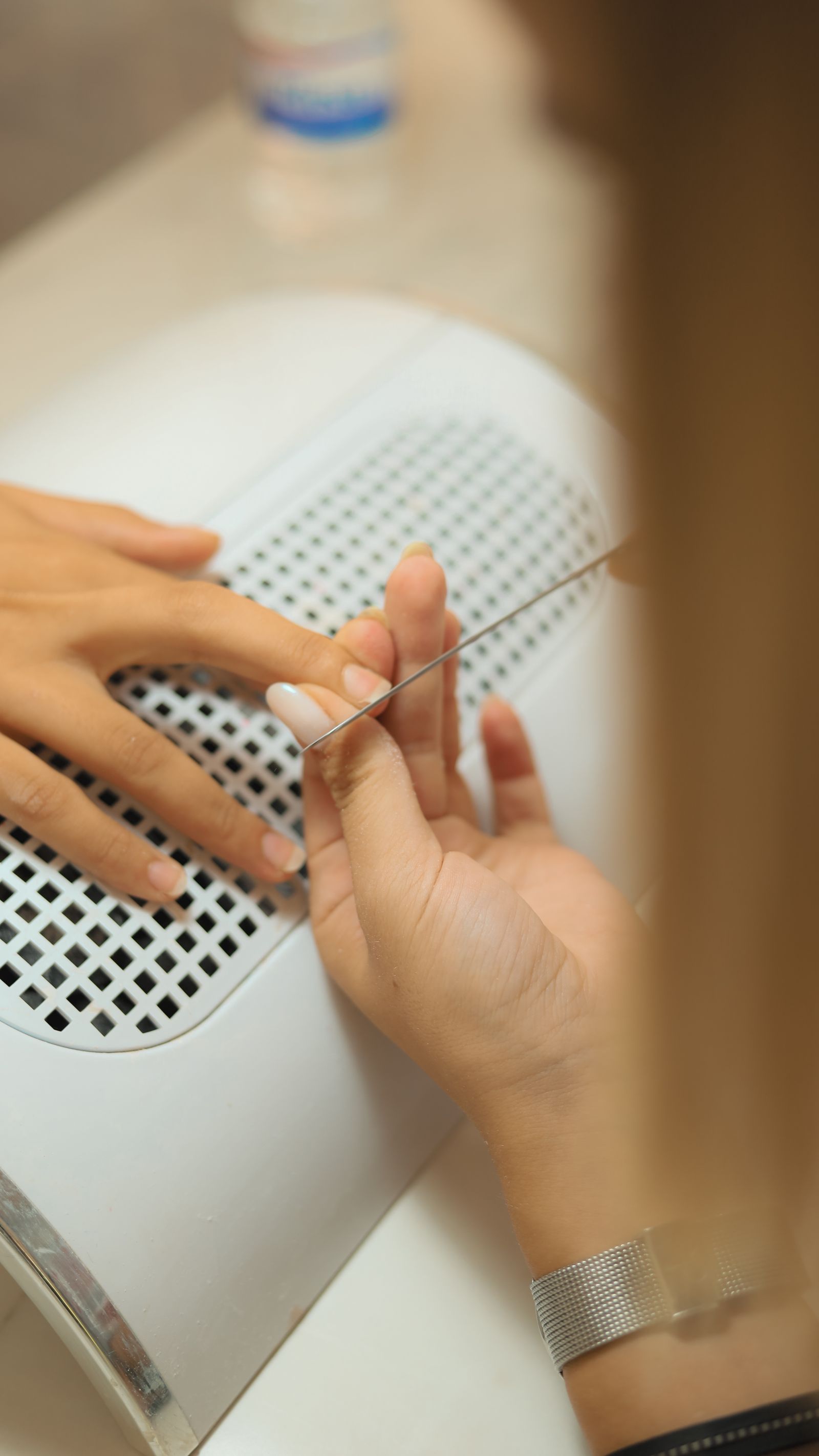
Health care is the clearest case. Many clinical settings restrict artificial nails and length outright for infection control, because longer nails and enhancements are harder to clean around and can harbor more bacteria, and gloves tear more easily over long edges. If you work in care, food handling, or childcare, check your employer's policy before the appointment, not after, and expect the natural or short row of the table to be your row. There is no shape or product that negotiates around a workplace rule.
Keyboard-heavy work is a negotiation instead of a rule. Short almond or oval shapes type far better than short square at the same length, because the tapered sides meet the keys at an angle instead of head-on. If you love length and live on a keyboard, shape is your compromise: medium almond will out-type medium square every time. Musicians split by instrument. Pianists and string players generally need nails at or near natural length on at least the playing hand, and many keep both hands short for consistency. Wind and brass players have more room, since the nails are not part of the sound. Tell your technician what you play. It changes the recommendation completely, and it is the kind of detail that gets a set built around your actual life in Cornelius rather than around a photo.
Starting shorter than the photo
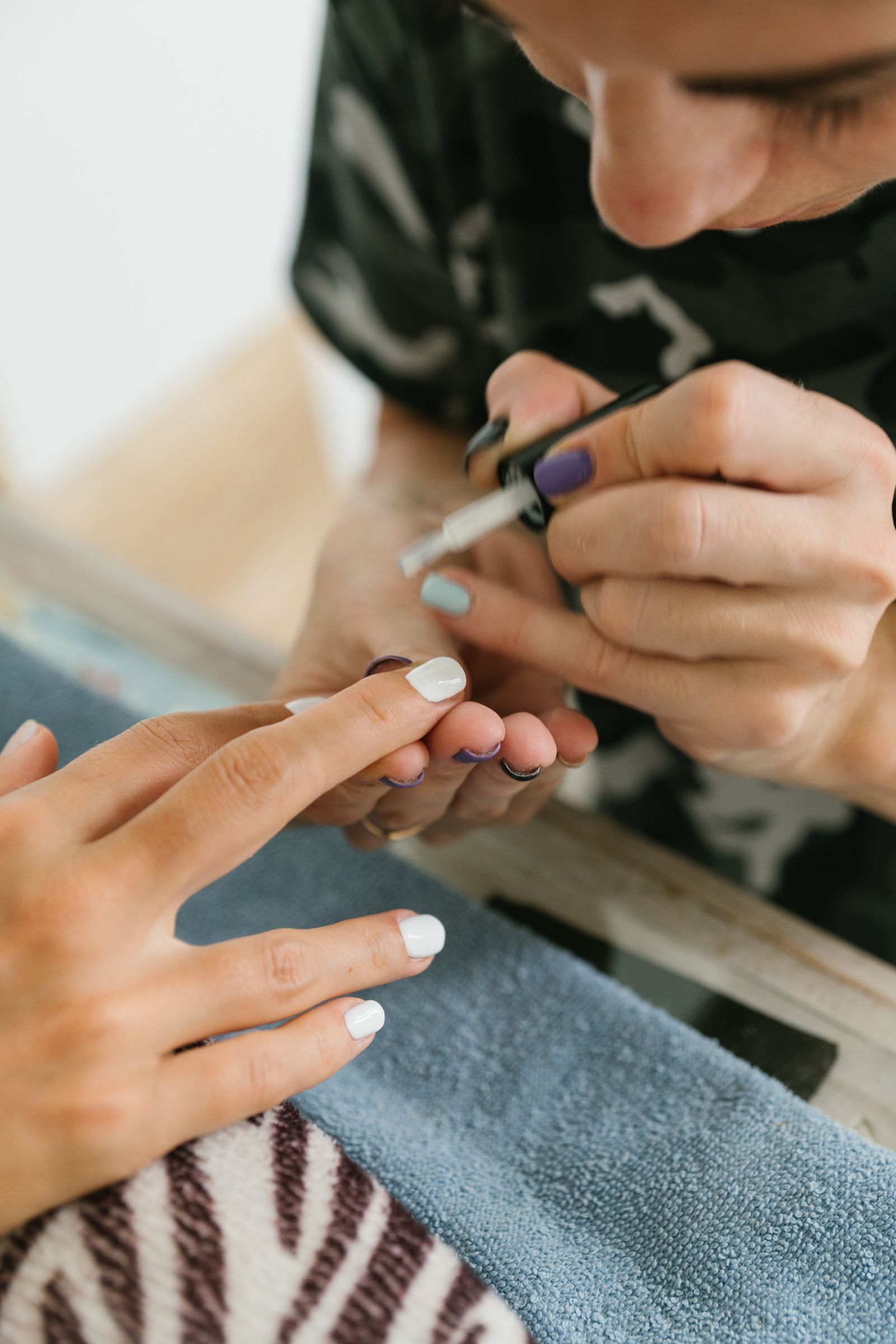
The reliable strategy for a first longer set is to go one step shorter than the picture you saved, wear it for a full cycle, and add length at the fill if the week went well. Product can be built longer at a fill far more easily than a broken natural nail can be un-broken. Most people who jump two steps at once spend the adjustment week breaking the set down to the length they should have started with, one accident at a time.
Length also interacts with maintenance honesty. Longer sets punish overdue fills, because the leverage problem compounds as growth moves the structure forward. If your schedule regularly stretches appointments, choose the shorter row and keep the clean wear. A short set that looks finished at week three beats a long set that looks expensive and broken at week two, every time, in every town.
Common questions
What is the best shape for typing with longer nails?
Almond or oval. The tapered sides reduce the head-on contact that makes square shapes clack and chip on keyboards, and most typists adapt to medium almond within the first week.
Can I start long and cut the set down later if it is too much?
Cutting a built set at home can crack the product and split the nail underneath. If the length is not working, have the salon shorten and rebalance it, which keeps the structure sound.
Do longer nails always break more?
They carry more leverage, so the same impact does more damage, and breaks tend to happen lower on the nail. Careful habits reduce the risk, but they do not cancel the physics.
Photos in this guide are representative stock images.
← All guides from Villaggio Nails & Spa← Back to Villaggio Nails & Spa